
Transforming Learning: The Future with Interactive Flat Panels
Mohammad Salman
15-Nov-2024

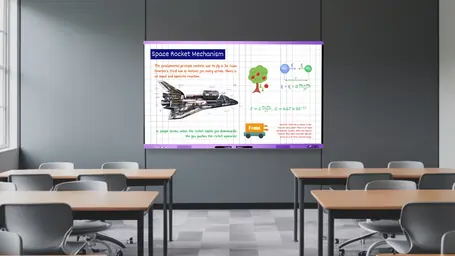
Enhanced Student Engagement
Interactive flat panels (IFPs) significantly enhance student engagement in the classroom. Unlike traditional blackboards or digital projectors, IFPs offer a touch-sensitive, high-definition display that allows students to interact directly with the content. They can touch, swipe, or write on the screen, making lessons more engaging and participatory. This hands-on approach helps to capture students’ attention and encourages active learning, making complex concepts easier to understand and retain.
Facilitation of Collaborative Learning
IFPs foster greater collaboration among students. Many interactive flat panels allow multiple users to interact with the screen simultaneously, which is ideal for group projects and collaborative activities. Students can work together in real-time to solve problems or create presentations, promoting teamwork and dynamic learning. Such collaborative experiences help students develop essential skills like communication, problem-solving, and teamwork, crucial for their future academic and professional endeavors.
Impact on Academic Performance
The impact of IFPs on academic performance is also noteworthy. Research indicates that students who use interactive technology in the classroom tend to perform better academically. The immersive learning experiences provided by IFPs enable a deeper understanding of the subject matter, leading to improved academic outcomes. Teachers can leverage the rich features of IFPs, such as 3D content and real-time feedback, to tailor their teaching methods to meet diverse learning needs, ensuring that each student can achieve their best potential.
Immersive Learning Experiences
Interactive flat panels bring immersive learning experiences to classrooms. They support the integration of 3D educational content, allowing students to explore and interact with complex concepts in a visual and engaging manner. For instance, students can rotate and zoom in on 3D models of biological cells or historical landmarks, bringing lessons to life. This type of learning not only makes the material more interesting but also aids in better retention and understanding.
Future-Proof Education
IFPs are a future-proof solution for modern classrooms. They integrate seamlessly with other educational technologies and tools, ensuring that schools stay current with technological advancements. Moreover, IFPs offer a more sustainable approach to education by reducing the need for paper and other traditional learning materials. With features that support both current and future educational needs, IFPs represent a significant leap towards creating more engaging, effective, and sustainable learning environments.
Conclusion
Interactive flat panels are revolutionizing classrooms by making learning more engaging, collaborative, and effective. As these technologies continue to evolve, they promise to further transform education, making it more accessible and impactful for students of all ages. The future of learning is here, and it’s interactive, immersive, and incredibly exciting.
Latest Blogs
Blog Categories
Leave a Comment
Comments
No comments yet. Be the first to comment!

