
Smart Board Processors Explained: Why Architecture Matters More Than Model Names
Salman Mohammad
12-Jan-2026

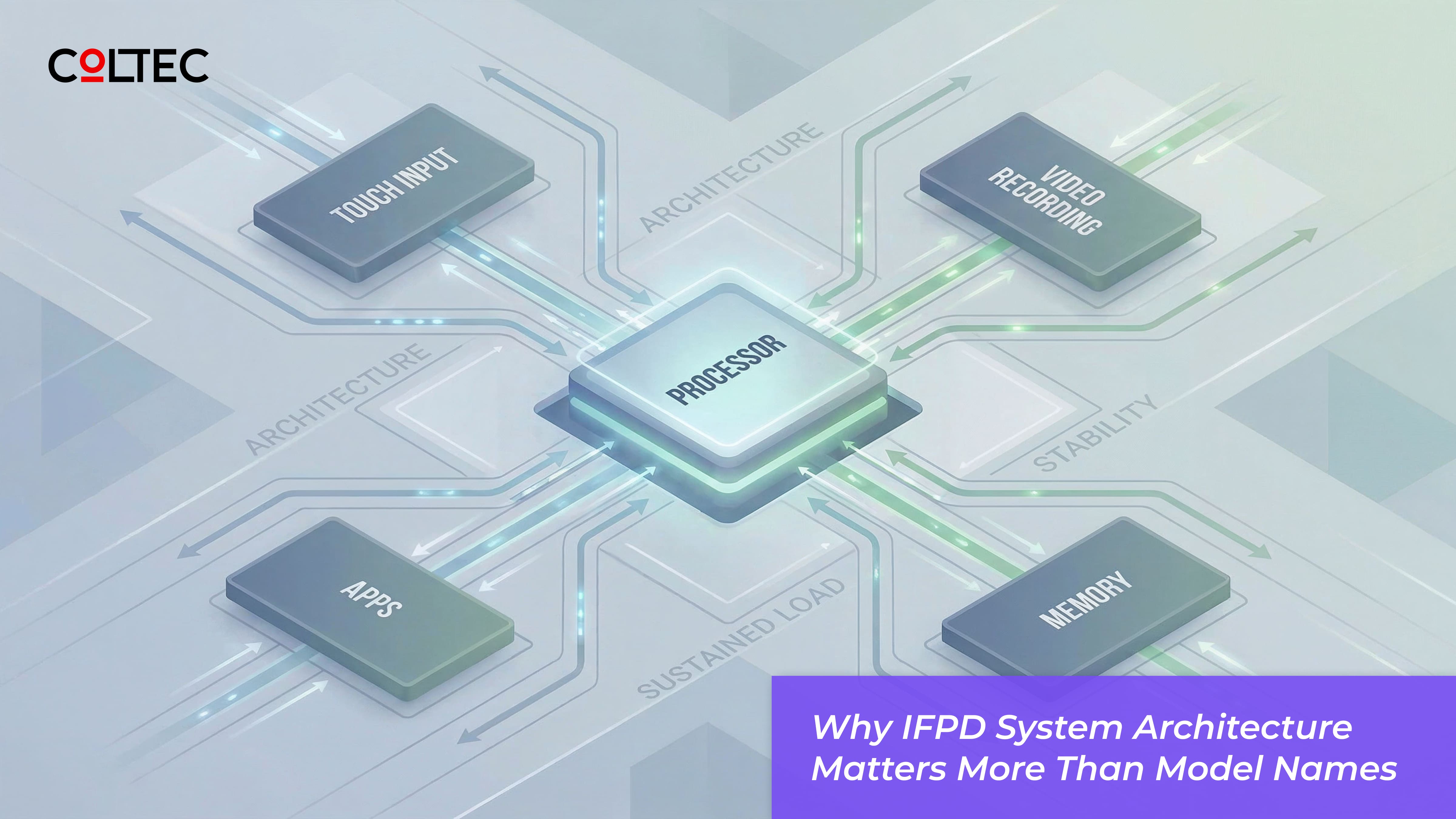
When smart boards are compared, processor names often become the headline. Model numbers, clock speeds, and core counts are treated as shortcuts for performance.
In real classrooms, this approach fails.
What determines classroom experience is not the processor label — but how the processor architecture behaves under sustained teaching conditions. This final article in the COLTEC smart classroom series explains how processors truly impact classroom performance, why architecture matters more than specifications, and how schools, buyers, and resellers should evaluate processors with clarity and confidence.
Why does processor architecture matter more than processor name in smart boards?
Because classroom teaching requires sustained, multi-task performance over long hours — and processor architecture determines how consistently a board can deliver that performance, not the model name printed on the spec sheet.
The Label Trap: Why Processor Names Mislead
Processor names are designed for market differentiation, not classroom decision-making. Two boards with different processor labels may perform similarly in classrooms, while others with impressive specifications may struggle within weeks of deployment.
The reason is simple: classrooms do not behave like consumer devices. Teaching environments demand continuous, multi-task stability, not short bursts of speed.
The Classroom Load Model
This builds directly on the performance fundamentals explained in what makes a smart board perform better, where internal architecture defines long-term classroom reliability.
A smart board processor is not managing a single task. During a live lesson, it must handle:
- Continuous handwriting and touch input
- Video playback and animations
- Fast app switching
- Screen recording
- Interactive and AI-assisted tools
This workload runs for hours, day after day. The processor must remain responsive, thermally stable, and predictable throughout the session.
This is fundamentally different from phones, tablets, or laptops that experience short, intermittent loads.
Architecture vs Specifications: The Consistency Principle
Specifications describe capability in isolation. Architecture determines consistency under load.
Processor architecture governs:
- How tasks are scheduled and prioritised
- How memory is accessed during multitasking
- How heat is managed over long sessions
- How performance degrades — or remains stable — over time
Boards built on classroom-first architectures feel smoother and more reliable, even if their specification sheets appear modes
Why Benchmark Thinking Breaks Down
This misconception also explains why the same smart board software feels different on different panels, even when specifications appear similar.
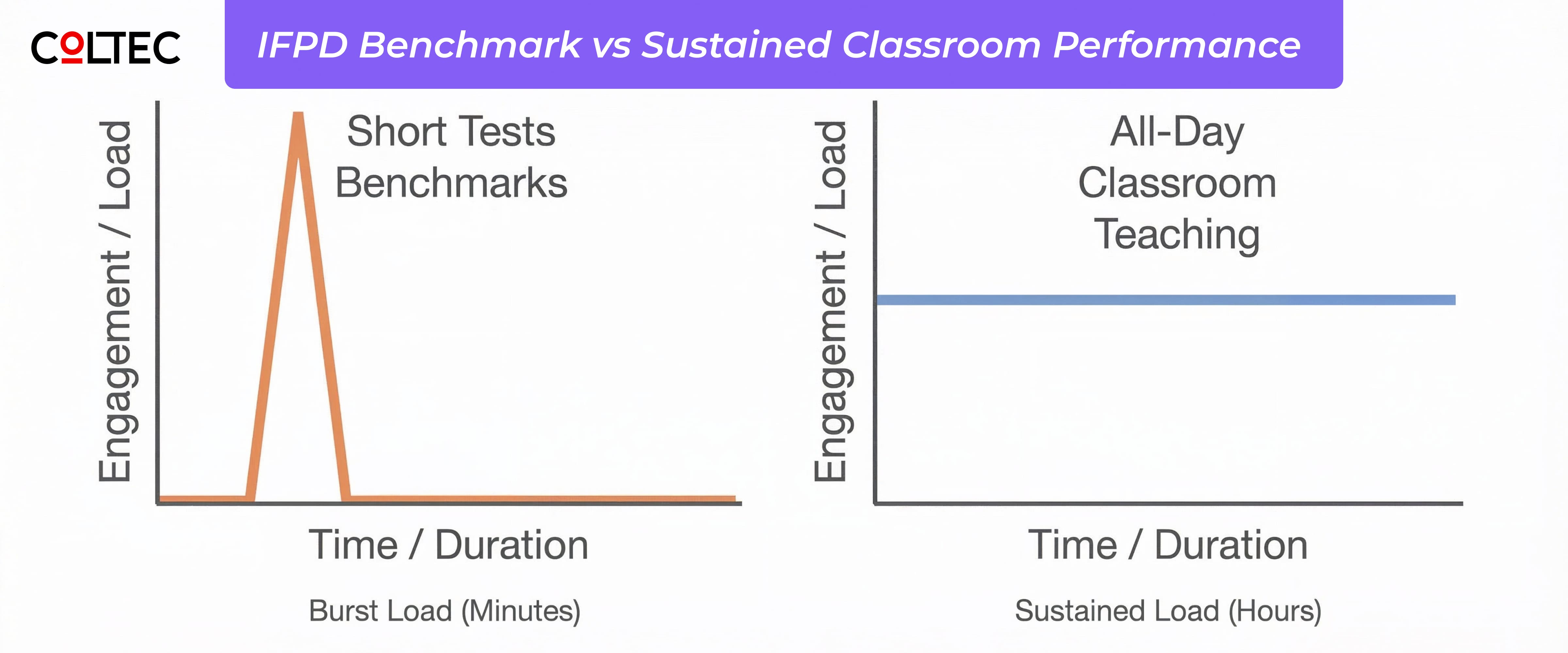
Benchmarks measure short-duration performance under controlled conditions. Classrooms demand long-duration performance under unpredictable conditions.
This creates a gap:
- A processor may score well in benchmarks
- But struggle during continuous writing, recording, and app switching
This is why benchmark-led decisions often result in lag, dropped frames, or delayed input during real teaching.
The Sustained Performance Curve
Classroom processors follow a predictable pattern.
Processors designed for consumer benchmarks often peak early and decline as thermal limits are reached. Classroom-optimised architectures are designed to remain stable across extended teaching sessions.
This sustained performance curve — not peak scores — determines whether a board feels reliable or frustrating over time.
How to Evaluate a Smart Board Processor (Practically)
Instead of comparing processor names, decision-makers should ask:
- Does performance remain stable after long teaching sessions?
- How does the board behave during heavy multitasking?
- Does responsiveness change after software updates?
- Is thermal behaviour controlled during continuous use?
These questions reveal far more than specification tables.
At COLTEC, processor selection begins with classroom workload analysis, not specification comparison.
Processors are evaluated in real teaching scenarios to ensure they deliver:
- Consistent responsiveness
- Reliable multitasking
- Long-term stability across years of use
This approach is reflected across our range of COLTEC Interactive Flat Panel Displays, which are engineered for classroom-first performance rather than short-term specification matching.
This approach ensures that hardware decisions support teaching outcomes — not marketing checklists.
Conviction Check for Buyers and Partners
This perspective is especially important when evaluating long-term investment value, which we examine in the real cost of a smart board.
Before finalising a smart board decision, pause and reflect:
- Are we comparing labels or classroom behaviour?
- Are we optimising for short-term specs or long-term stability?
- Are we buying a display — or a teaching system?
Clear answers to these questions prevent costly mistakes and future dissatisfaction.
Key Takeaway
In smart boards, processor architecture matters more than processor names.
Boards designed around classroom-first architectures deliver smoother teaching experiences, higher adoption, and stronger long-term value — regardless of the model number printed on the spec sheet.
This article completes COLTEC’s four-part education series on smart classroom technology, helping schools, buyers, and partners make informed, future-ready decisions.

Latest Blogs


Blog Categories
Leave a Comment
Comments
No comments yet. Be the first to comment!

